

Selecting the wrong secondary glazing manufacturer creates problems that outlast the project. Delays, inadequate acoustic performance, poor heritage compliance, units that don’t fit. The consequences fall on the specifier, the contractor, and ultimately the client. The decision deserves more scrutiny than it typically receives.
This guide sets out the criteria that architects, facilities managers, and procurement teams should apply when choosing a secondary glazing manufacturer, with specific reference to the factors that differentiate genuine specialists from generalist suppliers.
Accreditations and Quality Management
The first filter is straightforward. Does the manufacturer hold the accreditations that the industry expects?
BSI ISO 9001:2015 certification is the baseline for quality management in manufacturing. It demonstrates that the manufacturer’s processes, materials, and outputs are subject to consistent, audited controls. Without it, performance claims are difficult to verify. For commercial procurement, Constructionline Gold and CHAS (SSIP) accreditation are equally relevant. Both are standard pre-qualification requirements on public-sector and main contractor frameworks.
For architects working within NBS workflows, NBS Source listing is a practical necessity. It allows secondary glazing to be specified directly within the platform, reducing administrative friction and ensuring the specification is tied to a verified manufacturer. Granada Secondary Glazing is listed on NBS Source and holds an RIBA-Approved CPD, which reflects independent validation of technical expertise.
Manufacturing Capability and Scale
Secondary glazing is not a commodity product. The range of window types, sizes, cavity depths, and glass specifications encountered across a typical portfolio means that manufacturing flexibility matters considerably.
The questions worth asking are straightforward. Is the manufacturing done in-house or subcontracted? What CNC capability exists? What size units can the manufacturer actually produce? Does in-house powder coating allow colour matching, or is the client limited to a handful of stocked finishes?
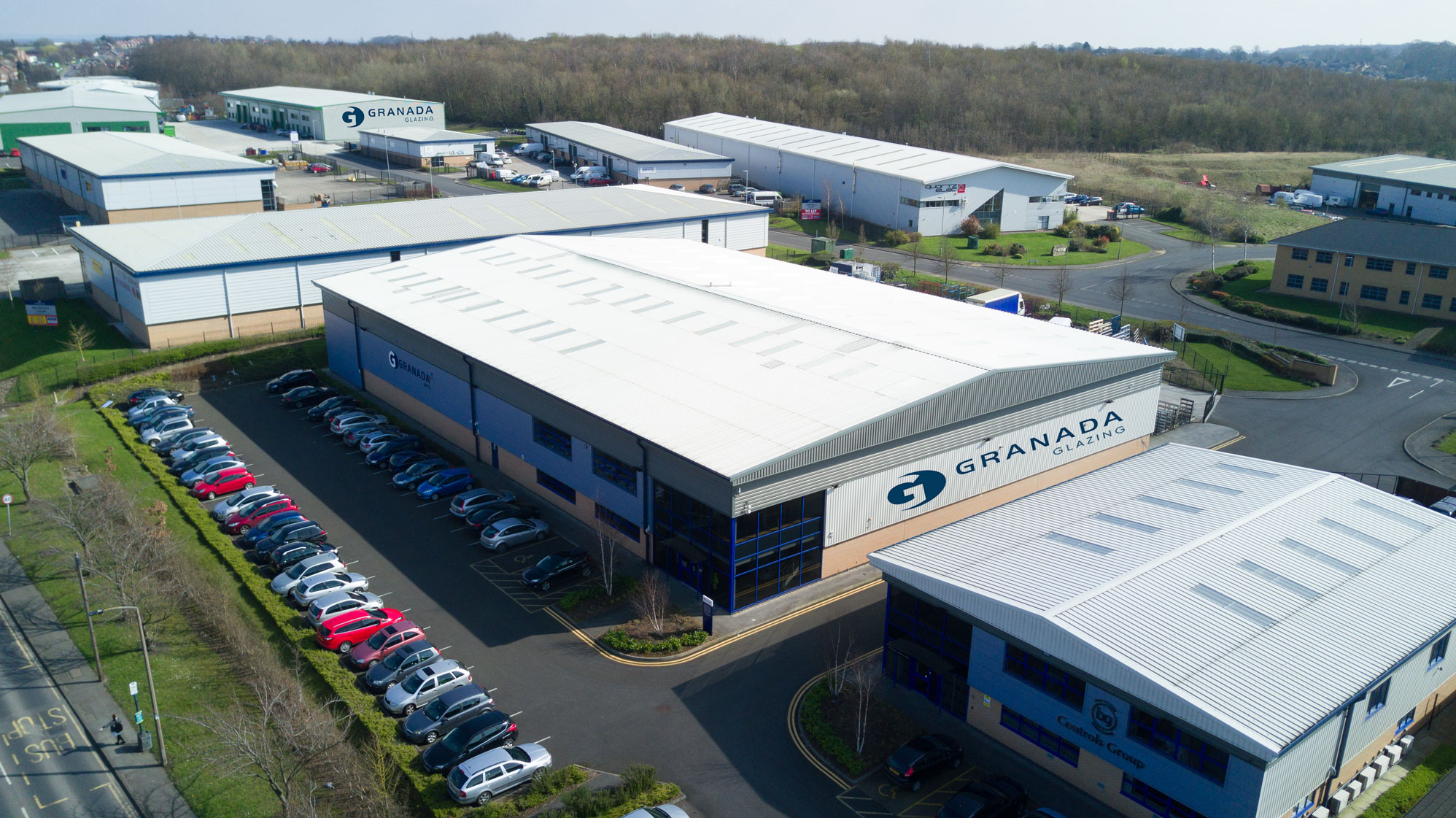
Granada Glazing manufactures entirely in-house at a 40,000 sq ft facility in Dinnington, South Yorkshire, producing approximately 25,000 frames per year. CNC machining, metal forming, and powder coating are all carried out on site, with access to over 200 RAL colours. Units are available up to 4,934mm wide on Horizontal Sliding and 3,325mm tall on Balanced Vertical Slider, with maximum unit weights reaching 180kg on heavy-duty hinged configurations. These are not figures that smaller or generalist manufacturers can match.
Technical Performance: Acoustic and Thermal
Published performance data is where the credibility gap between manufacturers becomes most apparent. Reputable manufacturers will provide tested Rw ratings, U-values, and glass specifications. They won’t rely on marketing approximations.
For acoustic applications, the Weighted Sound Reduction Index (Rw) is the correct metric. Secondary glazing consistently outperforms double and triple glazing in acoustic applications. Tested figures of 49dB Rw are achievable on Horizontal Sliding units with a 6mm toughened primary and 6.8mm acoustic laminate secondary, against approximately 35dB for double or triple glazing. The cavity depth matters significantly. Optimal acoustic performance requires 150–200mm glass-to-glass, achieved with reveal fix installation.
Thermal performance is expressed as a U-value in W/m²K. Granada’s Horizontal Sliding achieves 1.5 W/m²K with 4mm Low-E glass and an 80mm air gap. In real-world installations such as the hyper-acute stroke unit at Hallamshire Hospital in Sheffield, a centre-pane U-value of 1.9 W/m²K was recorded using Low-E glass in hinged units. A hardwood subframe, supplied as standard with every unit, acts as a thermal barrier and prevents cold bridging from the building fabric.
Specifiers should ask manufacturers for the specific glass specifications behind headline claims. A manufacturer who cannot provide product-level test data is unlikely to be able to support a technical specification.
Heritage and Listed Building Competence
For any project involving listed buildings or conservation areas, manufacturing competence is necessary but not sufficient. The manufacturer also needs to understand the regulatory framework and the constraints it imposes.
Secondary glazing is explicitly recommended by Historic England as the preferred intervention for listed buildings. It is non-invasive, reversible, and preserves the original window fabric. These qualities make it conservation-compliant where replacement glazing is not. A manufacturer that cannot articulate this distinction, or cannot demonstrate project experience in heritage contexts, introduces risk on sensitive schemes.
Granada has delivered secondary glazing to Grade I and Grade II listed buildings including Bishopthorpe Palace in York, Porchester Court in London, and the Radcliffe Science Library at Oxford University. Across more than 45 years of manufacturing, the company has worked with heritage consultants, conservation architects, and local authority planning teams on projects requiring Listed Building Consent compliance and alignment with Historic England guidance. The case studies are published and verifiable. A standard that prospective clients should hold all manufacturers to.
Explore our project case studies to see the breadth of heritage, education, healthcare, and commercial projects delivered across the UK.
Product Range and Application Coverage
A manufacturer with a narrow product range will apply that range to problems it was not designed to solve. Secondary glazing applications span traditional sash windows, modern casement windows, arched openings, bay windows, fire-rated locations, and environments requiring integral blinds or specialist glass combinations.
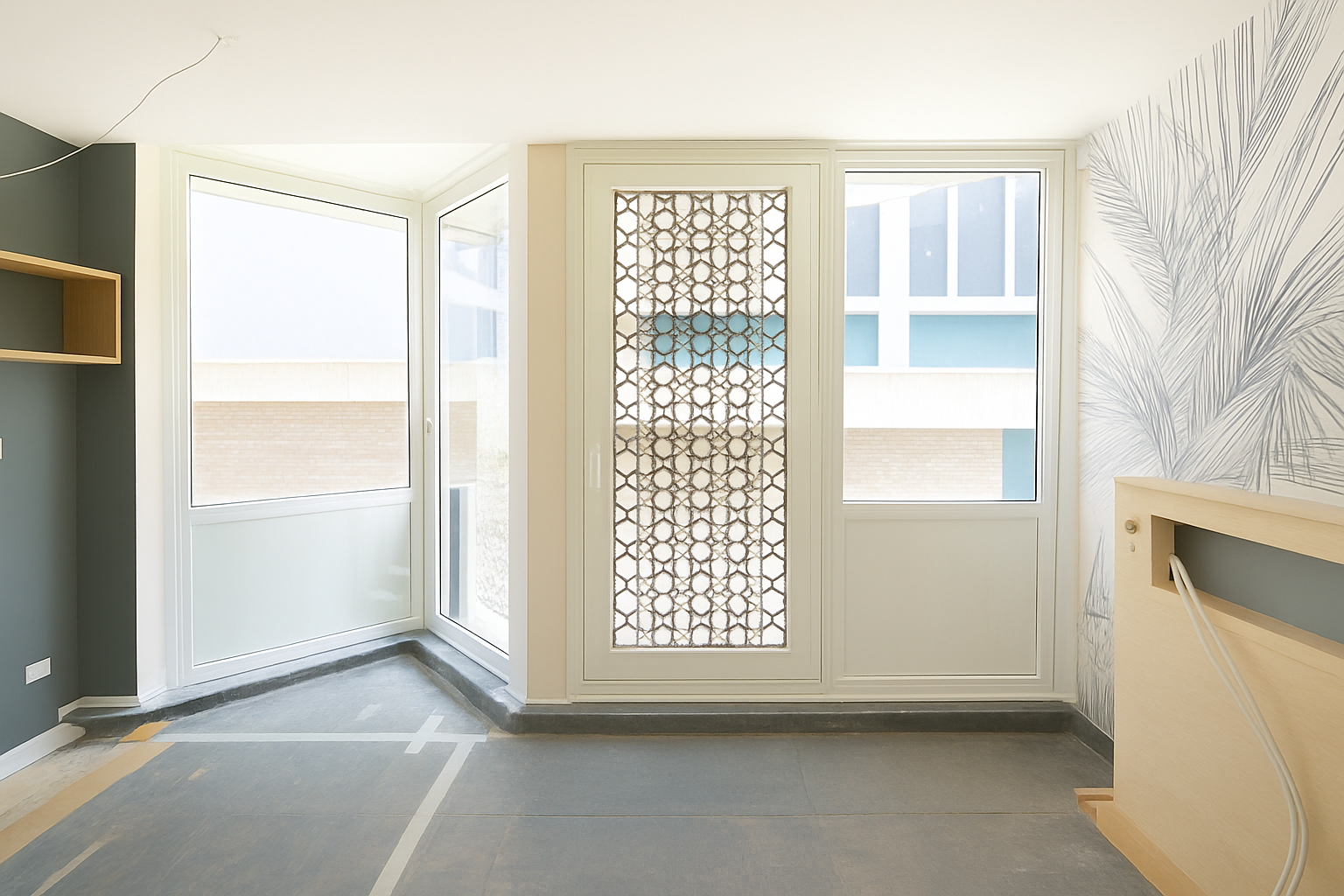
The full product range from Granada Secondary Glazing includes Horizontal Sliding, Balanced Vertical Slider (with tilt-in and slide-past variants), Hinged Units (including heavy-duty and tilt-and-turn options), Lift Out, Fixed, and Bespoke Made to Measure. The Hinged Unit is the only product in the range to support double-glazed sealed units (24mm and 28mm), making it suitable for applications requiring maximum thermal performance. The Balanced Vertical Slider is designed specifically for traditional sash windows, preserving the original operating mechanism via spring-balance technology.
Choosing a manufacturer whose range covers the full spectrum of likely project requirements reduces the need to split procurement across multiple suppliers. This reduces the coordination risk that fragmented supply creates. View the full range at our secondary glazing systems for professionals.
Lead Times, Delivery, and Trade Support
Reliable lead times and responsive technical support are operational requirements, not optional extras. For main contractors managing a programme, delays to secondary glazing installation can cascade into wider programme slippage.
The questions to ask are practical ones. What are standard manufacturing lead times? Is there a dedicated technical team? Are installation drawings available on request? For trade installers, does the manufacturer provide a price generator and trade portal for efficient quoting?
Granada operates a 500+ approved installer network across the UK, supported by regional sales representation and an online price generator that allows trade partners to produce indicative quotes before formal submission. Technical drawings and downloads are available via the Advice Centre.